

Canada’s food system is complex and interconnected. From climate change and extreme weather to geopolitical uncertainty and increasingly complex supply chains, a range of factors can affect how food is grown, transported and accessed. For rural, remote and northern communities in particular, these challenges can make reliable access to fresh food difficult and reinforce the importance of building greater resilience into local food systems.
So, what role can local food production play?
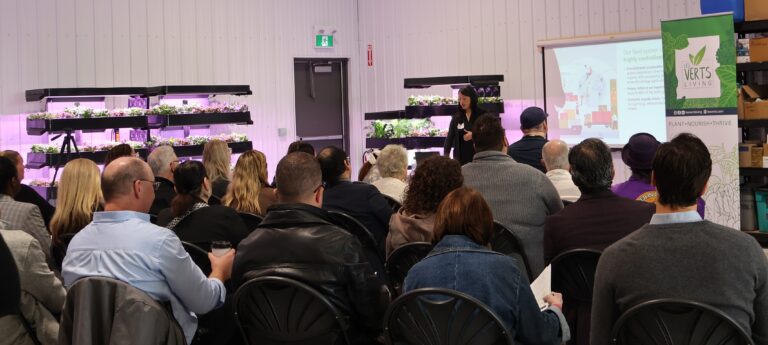
In October 2026, we welcomed guests to our Innovation Centre for Growing Resilience: A Practical Approach to Local Food Production, an event exploring how community-scale food production can help strengthen food security and improve access to fresh food closer to home.
A highlight of the event was hearing directly from two guest speakers from rural and remote communities who shared their experiences using our hydroponic systems to grow food for their communities.
A northern community grows 60 heads of lettuce every week
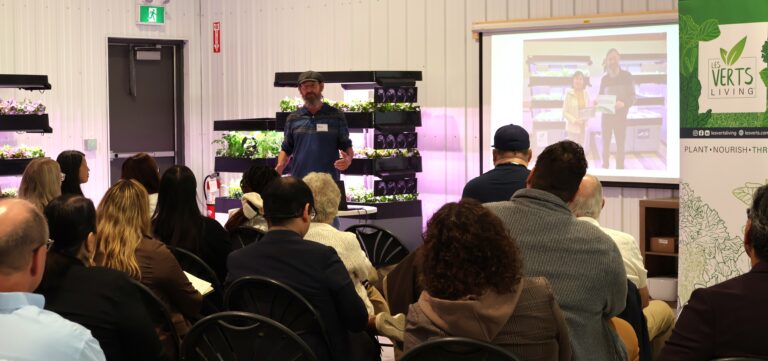
Our first speaker was Rick Barentsen, Gardening Coordinator for the Grow North project in Leaf Rapids, Manitoba. Rick has been growing fresh vegetables in the school’s Terrace Pro Community Harvest System for the past year, and distributing 60 to 70 heads of green vegetables every week to the local residents.
“People are really waiting for it. We post it on social media and on the bulletin boards. Usually we say we’ll be there for two hours, but most of the time in an hour everything is gone.”
— Rick Barentsen
Read more about Rick’s experience in this article.
A rural town benefits from a community garden approach
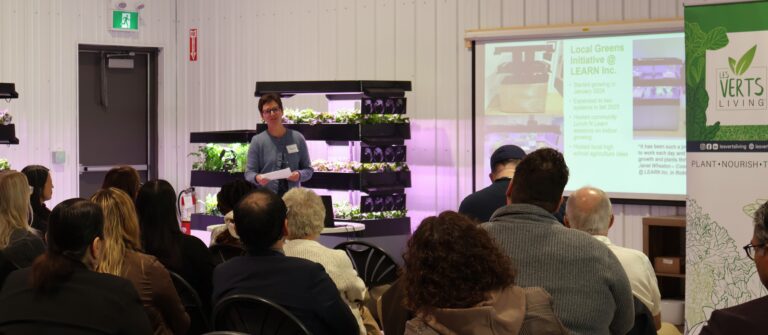
Our second speaker was Janice Langevin, an instructor at the LEARN Centre in Roblin, Manitoba. Janice and the team at LEARN have been using their Terrace Pro systems in a variety of ways to serve their community, including supporting their educational programming for all ages, growing fresh produce for the local food bank, growing transplants for their outdoor garden, fundraising and more.
“Staple items like potatoes and carrots are easy to come by, but not fresh greens and there have been times when our one and only grocery store had no lettuce available because of recalls and supply issues. However, with the indoor garden, we have proven to ourselves and our community that anyone can grow lettuce, leafy greens, herbs, and tomatoes all in the dead of winter. ”
— Janice Langevin
Read more about LEARN’s experience in this article.
These experiences are an important reminder that food resilience looks different in every community. Solutions need to reflect local needs, conditions and priorities, while creating opportunities to build capacity and increase access to fresh food.
Introducing the Community Harvest System
The event also marked the launch of our Terrace Pro Community Harvest System, a practical entry point to community-scale food production. We shared how the system works and the impact it is already having on communities like Leaf Rapids.
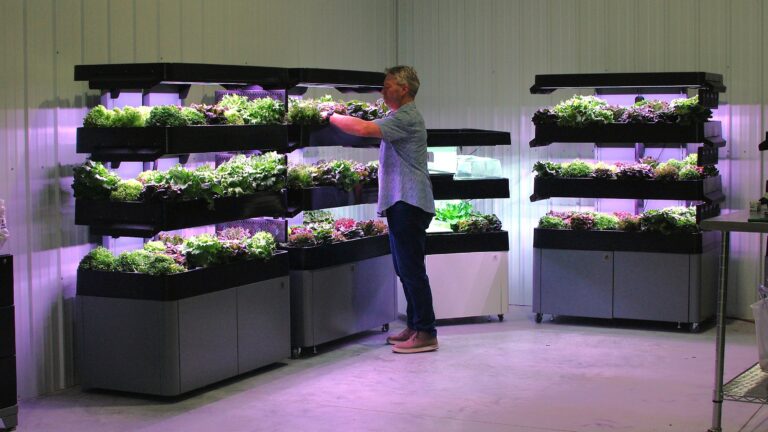
The Community Harvest System is a complete indoor hydroponic growing solution built for reliable, year-round community food production using existing indoor spaces. Some key benefits include:
- 60 heads of lettuce every week
- 90% less water than conventional agriculture
- Simple, non-technical operation with under 2 hours of effort per week
- Low energy usage and input costs
- Easily scalable as needs grow
And because of the simplicity in setting up the system, communities can get growing within a day of delivery.
For more on the Community Harvest System, visit our Communities page here.
Our goal is to help make local food production a practical option for more communities, with solutions that can respond to their circumstances and ambitions.
Turning conversation into action
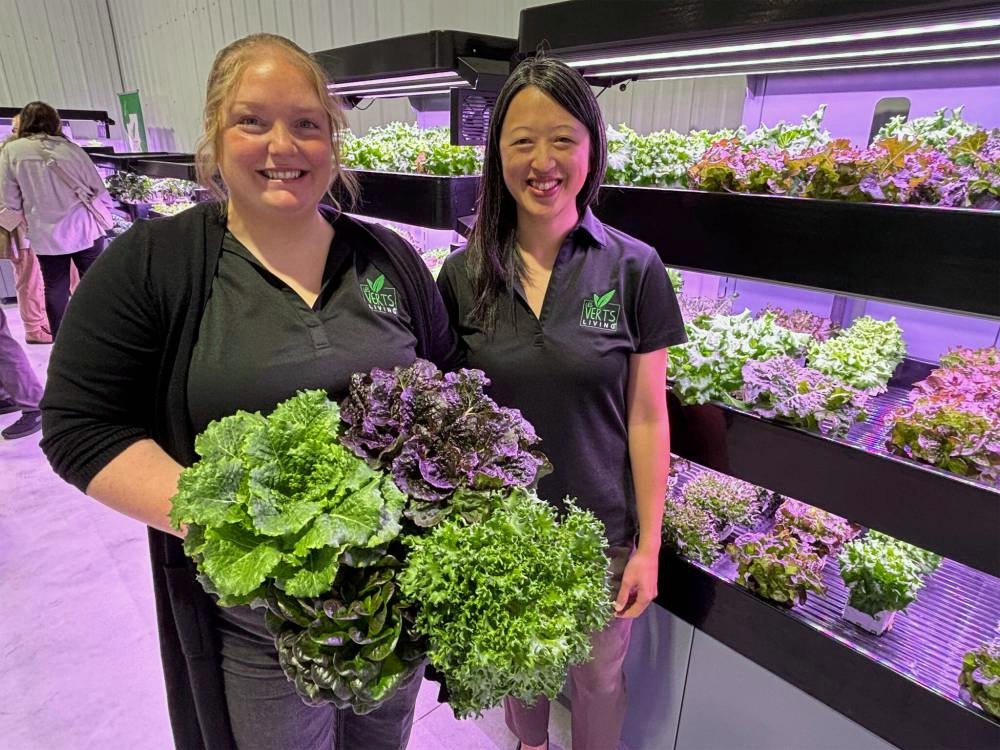
Alongside the presentations and system launch, guests toured our Innovation Centre to see hydroponic growing in action and connect with others working to improve food security.
The conversations throughout the event reinforced an important message: building more resilient food systems takes more than technology alone. It also takes community knowledge, practical solutions and collaboration between the people and organizations working toward better access to fresh food.
We’re grateful to our guest speakers and everyone who joined us for Growing Resilience. Their experiences and perspectives made the event a valuable opportunity to learn, share ideas and explore what more resilient local food production could look like in practice.
Want to explore what’s possible for your community?
Whether you’re exploring a community growing project, looking for ways to improve access to fresh food or interested in the potential of hydroponic systems, we’d welcome the conversation.
Connect with our team at hello@lesverts.com.
Read more: Winnipeg Free Press article covering the event.
